

Retail Theft Laws Update (2026): Felony Threshold Changes Across the U.S
Insights Article
Posted: July 15, 2026
Why Felony Theft Thresholds Matter for Retailers
Retailers operating across multiple states must navigate a complex and inconsistent legal landscape. Felony theft thresholds directly impact how theft is prosecuted, how repeat offenders are handled, and how loss prevention teams prioritize response strategies.
Lower thresholds may enable quicker felony charges, but do not prevent theft incidents from occurring. Higher thresholds may allow repeat low-value thefts to accumulate before legal consequences apply. As a result, retailers cannot rely solely on legislation to protect their stores.
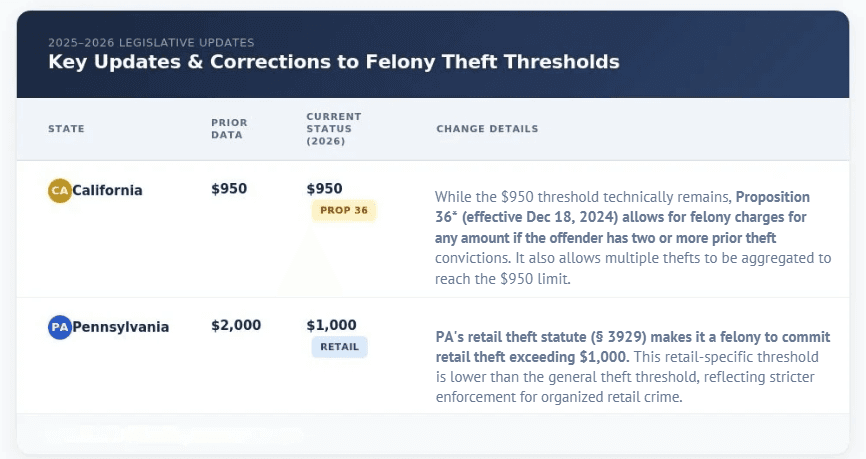
Retail theft laws continue to evolve as states respond to rising shrink, organized retail crime, and enforcement challenges. The table below highlights key corrections and legislative updates to felony theft thresholds across select U.S. states for 2025–2026, clarifying where thresholds have changed, where they remain the same, and how recent laws impact prosecution and retail risk.
Detailed Breakdown of Major Changes
- California (Proposition 36): This is the most significant shift. Known as the Homelessness, Drug Addiction, and Theft Reduction Act, it effectively creates a “three strikes” rule for petty theft. Even if someone steals $5 worth of goods, it can be charged as a felony if they have two prior theft-related convictions.
- Florida: The threshold is $750, but new 2024 laws lowered the felony threshold to just $40 if the property is taken from a dwelling (porch piracy) and expanded the ability to aggregate multiple retail thefts over a 120-day period.
- Virginia: There was a discrepancy in the blog post’s data. To clarify, the current threshold in Virginia is $1,000. Stealing anything valued at $1,000 or more is considered “Grand Larceny,” a felony.
Summary of National Extremes
- Highest Thresholds: Texas and Wisconsin still hold the highest limits at $2,500.
- Lowest Thresholds: New Jersey remains the lowest at $200.
How Purchek Technology Supports Retailers
Proactive, in-store prevention solutions are critical to reducing shrink and maintaining safe, open shopping environments.
Gatekeeper Systems’ Purchek technology offers a universal solution that helps retailers combat theft, regardless of local felony theft thresholds or legal frameworks. Here’s how it benefits retailers:
- Confrontation-Free Theft Prevention
Purchek technology prevents theft at the point of exit. When a cart attempts to leave without payment, the SmartWheel device disables it, stopping the theft without requiring direct confrontation. This reduces the risk of violence, ensuring a safer environment for both employees and customers.
- Retaining Unpaid Merchandise
The Purchek solution focuses on preventing loss rather than just detecting it. By locking the cart, you ensure that unpaid merchandise stays in the store, proactively and effectively addressing loss prevention. - Maximizing Profits and Safety
By retaining merchandise and minimizing safety risks, the Purchek pushout theft prevention solution enhances retailers’ bottom lines. Fewer losses mean higher profits, and safer stores contribute to a better overall shopping experience, attracting additional shoppers. - Data-Driven Insights
Purchek Theft Intelligence Services provide high-definition event video and detailed analytics, offering actionable insights into theft patterns and the identification of repeat offenders. By automating event recording and analysis, retailers can address vulnerabilities, validate ROI, and refine strategies. Customizable reports allow for effective resource allocation and targeted theft deterrence, fostering a smarter approach to protecting products, profits, and people.
Conclusion
Between 2025 and 2026, some states (California and Pennsylvania) updated or clarified felony theft thresholds, correcting prior inconsistencies and reflecting stricter enforcement trends.
In an era where theft prevention is more challenging than ever, Gatekeeper Systems’ Purchek technology offers a forward-thinking, scalable solution that adapts to the unique needs of retailers across diverse legal landscapes. By investing in Purchek technology, retailers are not just preventing theft; they are investing in a safer, more efficient, and more profitable future.
About Gatekeeper
Gatekeeper Systems’ expanded product suite of intelligent cart and loss prevention solutions — including FaceFirst face matching software, offers solutions for EVERY retailer’s needs to minimize merchandise loss, reduce asset and labor expenditures.
Gatekeeper’s loss prevention and cart containment solutions utilize patented locking technology to put an end to cart-based shoplifting, shopping cart loss, and uninformed decision-making. Cart management solutions increase safety and reduce labor costs by maximizing productivity while simultaneously resulting in a positive store image.
Intelligent pushout theft prevention solutions stop thieves and their cart full of unpaid merchandise from leaving the store. Customizable technology allows retailers to defend their entire store or just a high-loss department based on the store’s unique layout.
Gatekeeper Systems’ FaceFirst face matching software identifies known offenders and persons of interest in real time, empowering store teams to proactively address threats before losses occur. This advanced AI-powered solution integrates seamlessly with existing security infrastructure to enhance safety for associates and customers alike.
Business Intelligence solutions provide increased visibility for informed decision-making. Increase efficiency, optimize fleet size, and perfect the entire customer shopping experience with store and enterprise-level analytics.
Other Articles You Might Like
Pushout Theft Prevention: Why the Shopping Cart Is the Control Point
Read Article: Pushout Theft Prevention: Why the Shopping Cart Is the Control Point
Key Retail Theft Statistics Every Retailer Should Know
Read Article: Key Retail Theft Statistics Every Retailer Should Know
No News Is Good News: The Business Case for Deterrence
Read Article: No News Is Good News: The Business Case for Deterrence